


Stay connected with Commission updates, Tribal Nation spotlights, community resources, events, and more.
About the ND Indian Affairs Commission
The North Dakota Indian Affairs Commission is the liaison between the Executive Branch and the Tribes in North Dakota. Duties include mediation service with the Tribes and State, and working with other state agencies regarding proper protocol in working with Native Americans and Tribal governments.
Created by the North Dakota Legislature in 1949, the ND Indian Affairs Commission was one of the first such commissions established in the United States. Although the official function of the NDIAC has been modified over the years to reflect changes in federal and state policy, the main goal of the Commission has always been to create a better North Dakota through the improvement of Tribal/state relations and a better understanding between Native Americans and non-Native people.
North Dakota's Native people remain a rich cultural resource who have endured and survived many oppressive federal policies. By educating ourselves about this history and the significant contributions made by the Native people, we can improve relationships and truly extend our wonderful North Dakota quality of life into Indian country.
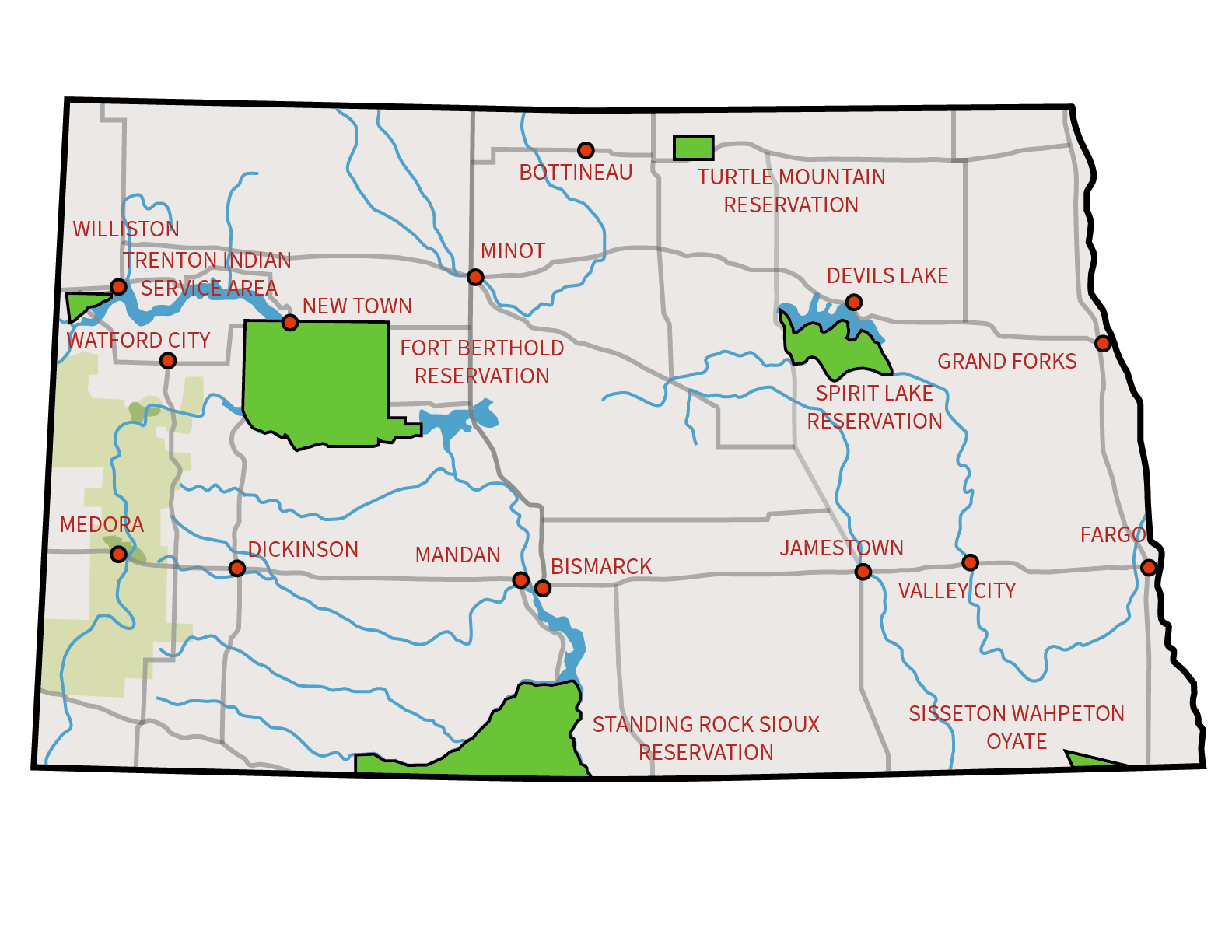
North Dakota Tribal Nation & Communities
There are five federally recognized Tribes and one Native community located at least partially within the State of North Dakota. These include the Mandan, Hidatsa, & Arikara Nation (Three Affiliated Tribes), the Spirit Lake Nation, the Standing Rock Sioux Tribe, the Turtle Mountain Band of Chippewa, the Sisseton Wahpeton Oyate Nation, and the Trenton Indian Service Area.
In total, 31,329 Native Americans reside in North Dakota, accounting for 4.9% of the state's population. Almost sixty percent live on reservations, and over forty percent of these Native Americans are under the age of 20.

2026 Government-To-Government Conference
View photos from the 2026 Government-To-Government Conference that took place on June 3rd and 4th in Bismarck. During this conference, tribal leaders, state agencies, federal partners, and community stakeholders came together to strengthen relationships and discuss issues impacting Tribal Nations across North Dakota.

